Bill Gates’ secret ‘Q’ clearance at the Department of Energy raises nuclear and surveillance questions that demand answers
08/03/2026 / By Lance D Johnson
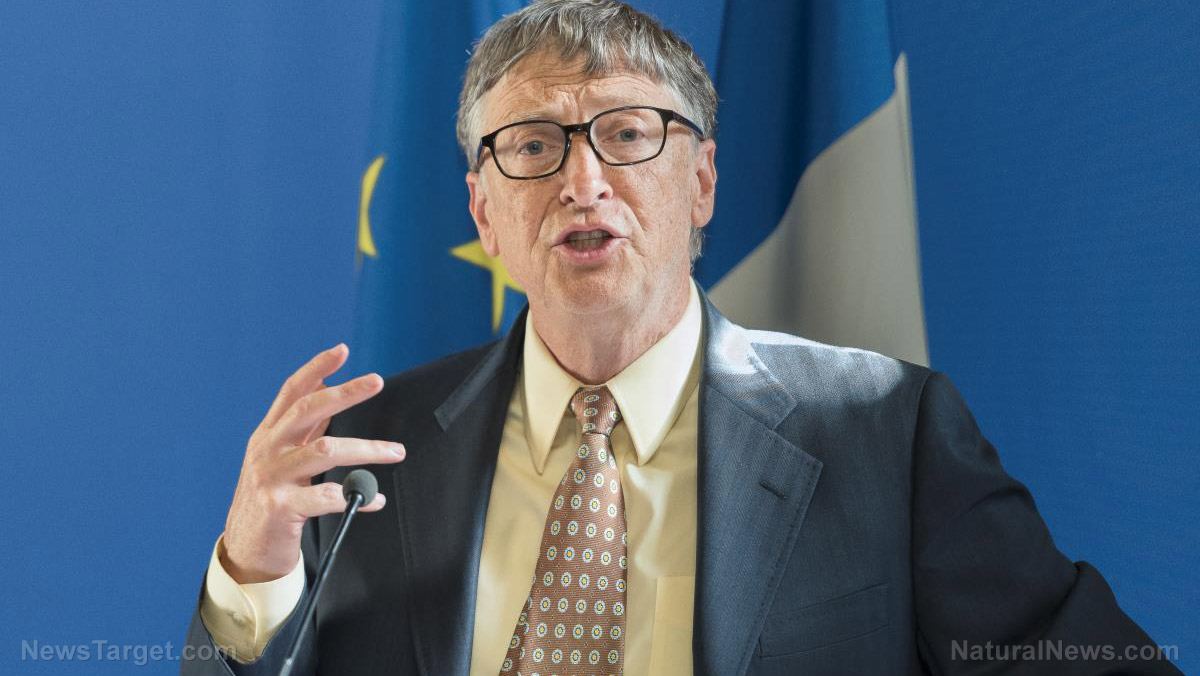
The revelation that Microsoft co-founder Bill Gates held a top-tier “Q” security clearance at the Department of Energy for seven years, from 2014 to 2021, has ignited a firestorm of scrutiny over the intersection of private wealth, public health policy, and nuclear secrets. The clearance, confirmed by a DOE letter entered into the Congressional record by Sen. Rand Paul, was granted reciprocally, meaning another federal agency vetted him first, yet that agency remains unnamed. This ambiguity, coupled with Gates’ prominent role in shaping global COVID-19 response, raises profound questions about why a private citizen with no official government position enjoyed access to the nation’s most sensitive nuclear and energy infrastructure during a period of unprecedented public health mandates.
Key points:
- Bill Gates held a DOE “Q” clearance from June 2014 to December 2021, spanning the entirety of the COVID-19 pandemic.
- The clearance was granted reciprocally, but the originating federal agency is not identified in the DOE letter.
- A “Q” clearance is the highest classification level at the DOE, typically reserved for nuclear weapons design and national security work.
- Gates founded TerraPower, an advanced nuclear reactor company, but the DOE letter does not cite this as the reason for the clearance.
- Sen. Rand Paul released the letter during Dr. Anthony Fauci’s Senate hearing, where Fauci invoked the Fifth Amendment over 100 times.
- Gates has been a vocal advocate for lockdowns, mask mandates, and widespread vaccine distribution, policies that some critics argue served as an obedience test for the population.
- The DOE’s clearance system applies enhanced scrutiny and conservative risk tolerance compared to Department of Defense clearances, making Gates’ clearance even more anomalous.
- The clearance expired in December 2021, but the DOE has not explained why it existed or what specific programs Gates accessed.
- Gates’ advocacy for vaccine mandates and public health restrictions has led to accusations that he influenced federal policy despite holding no elected office.
DOE’s Q clearance reserved for individuals working on nuclear weapons designs, among other national security concerns
The Department of Energy’s “Q” clearance is not a routine credential. It is the agency’s highest classification level, reserved for individuals working on nuclear weapons design, national laboratories, critical energy infrastructure, and highly classified scientific research. The clearance process is notoriously rigorous, requiring extensive background investigations, interviews with associates, and a deep dive into financial, psychological, and personal history. Unlike Department of Defense clearances, DOE cases operate under a separate administrative structure with distinct hearing bodies and adjudicative standards. The agency’s risk analysis is more conservative because of the mission sensitivity. Any financial instability, psychological condition, or pattern inconsistency can disqualify a candidate. The clearance is not merely about trust, it is about institutional defensibility, ensuring that no individual with access to nuclear secrets becomes a liability.
Gates’ clearance was granted under President Obama and renewed throughout the Trump and Biden administrations, coinciding with his aggressive public advocacy for restrictive pandemic response measures, geoengineering experiments, vaccine and passport investments, the production of GMO mosquitoes and ticks, personal farmland acquisition, and demand for a carbon-less future. The letter confirms the clearance was granted reciprocally on June 11, 2014, meaning another federal agency vetted him first, and the DOE simply honored that vetting. That agency is not named. This omission is glaring because reciprocal clearances are typically only granted when there is a demonstrated need for cross-agency access to classified information. For a private citizen with no formal government role, such a clearance is extraordinarily unusual. The obvious question is which agency decided a private individual with a track record of sabotaging basic human rights needed access to Restricted Data under the Atomic Energy Act, and for what program.
Bill Gates shapes the future of energy and pandemic policy, enjoying high level security clearances
One possible explanation is Gates’ role at TerraPower, his advanced nuclear reactor company, which has worked with DOE national laboratories and received Nuclear Regulatory Commission approval in March. A nuclear executive holding a nuclear clearance is not scandalous on its face. But the DOE letter does not mention TerraPower, and it does not explain why the clearance was necessary for his work. The timing is also notable. The clearance began in 2014, years before the plandemic (which Gates was a part of) and expired in December 2021, just as the omicron wave hit. This period aligns with Gates’ most intense public health advocacy, including his foundation’s funding of vaccine research and his push for global vaccine mandates. His influence during this time was so significant that he was dubbed the “unofficial WHO director” by some critics, shaping global health policy despite holding no public office.
Gates’ track record on COVID-19 policy has been controversial. He advocated for widespread lockdowns, mask mandates, and vaccine passports, warning that unvaccinated individuals posed a threat to the public. He suggested that the pandemic was a dress rehearsal for a more lethal virus, urging governments to prepare for “disease X.” His comments about using vaccines to track populations and his support for digital IDs fueled accusations that he sought to implement a global surveillance state. These policies served as an obedience test, conditioning the population to accept government directives without question, and depopulation schemes that Gate’s endorses.
The fact that Gates held a Q clearance during this period raises the possibility that his public health advocacy and carbon-less energy advocacy was linked to classified interests. The DOE’s role in the pandemic response is often overlooked, but the agency oversees the National Nuclear Security Administration and the nation’s energy infrastructure. The COVID-19 crisis was not just a public health emergency, it was an economic and energy crisis. The push for renewable energy and the transition away from fossil fuels was a defining feature of the Biden administration, and Gates has been a leading investor in green energy technologies. His clearance may have given him access to classified information about energy infrastructure vulnerabilities, allowing him to shape policy recommendations in ways that benefited his business interests.
Powerful forces in the federal government grant Bill Gates access to classified information
The DOE’s clearance system operates with a unique culture of scrutiny. Unlike DoD cases, which often proceed through the Defense Office of Hearings and Appeals with a structured adjudicative process, DOE cases may go through DOE administrative hearings. The evidentiary posture is different, and the internal review layers are more conservative. The DOE emphasizes stability, pattern consistency, and reduced tolerance for ambiguity. Financial concerns under Guideline F may be evaluated more harshly, and psychological conditions under Guideline I may trigger enhanced scrutiny. For Gates, a man with immense wealth and global influence, passing this rigorous process suggests that powerful forces within the federal government supported his access to classified information. The question is why.
The release of this letter by Sen. Rand Paul is significant because it comes at a time of growing distrust in federal institutions. The public is increasingly questioning the motives behind pandemic policies, vaccine mandates, energy policies, and the consolidation of power in the hands of unelected billionaires. Gates’ clearance is a symbol of the troubling nexus between private interests and public policy. It suggests that the federal government is willing to grant extraordinary privileges to crony capitalists who align with the establishment narrative, while ordinary citizens face surveillance and restrictions on their civil liberties. The DOE’s refusal to explain the clearance only deepens the suspicion that Gates’ access was not about nuclear energy, but about something far more consequential, perhaps the infrastructure of the post-pandemic surveillance state.
Sources include:
Submit a correction >>
Tagged Under:
bill gates, conspiracy, corruption, dangerous, deception, deep state, DOE administration, energy infrastructure, insanity, national security, nuclear energy, nuclear secrets, power, Q clearance, techocrats, TerraPower, truth
This article may contain statements that reflect the opinion of the author
RECENT NEWS & ARTICLES